Read Time:8 Minute, 51 Second
When we think of forced migration, we often imagine people fleeing war zones or natural disasters like floods or earthquakes. It is commonly understood as the result of an unplanned and sudden crisis that forces people to move. However, this understanding is incomplete. It overlooks the reality that displacement can also be planned—for example, when governments initiate population movements in the name of progress or development. Compared to conflict-induced migration, this form of displacement is less frequently studied or discussed, despite its significant and long-term impact on affected communities.
First, what is displacement? According to the IOM (2025), it is:
“The movement of persons who have been forced or obliged to flee or to leave their homes or places of habitual residence, in particular as a result of or in order to avoid the effects of armed conflict, situations of generalized violence, violations of human rights or natural or human-made disasters.” And is seen as arbitrary “In cases of large‐scale development projects, which are not justified by compelling and overriding public interests”.
To explain how it is possible that some forms of displacement are not— or not immediately—recognized as such, I would like to tell the story of the Marron society in Suriname, whose displacement was caused by a project framed as a development initiative. The main issue here is that, according to the IOM definition, displacement can result from development projects; however, when such projects are justified by compelling and overriding public interests, the resulting forced relocation is often perceived as legitimate rather than coercive — and therefore is not, or not in time– labeled as displacement. The following information about the Marron society, draws on both desk research and fieldwork I carried out in Suriname for my bachelor’s thesis.
Marrons1 are the descendants of self-liberated African slaves who live in the interior lands of Suriname (Price, 2012). Their escape was not something easily achieved as the colonists fought back, sending militias to recapture and punish—hamstringing, amputation of limbs, and a variety of deaths by torture- the runaways. Nevertheless, the Marrons were not held back by the threats of the bakra’s (the whites) and often were victorious as they became experts of their surroundings and all other aspects of guerrilla warfare. By the late 1740s, the colonists were finding the expense overwhelming. Moreover, the Dutch colony had developed quite a reputation and had turned into a flourishing plantation colony which is why they made the decision that the warfare made little sense. Their decision was followed by a peace treaty negotiation with the bosbewoners (Bush Negroes) which became definitive in 1762 (Lank-Coninde et. all., 2023). The permanent treaty established three inalienable principles: freedom from slavery, independence (the right to govern their own society at their own terms) and being in control over their own territory (Mutsaers & de Vries, 2023). However, as we shall see, especially the last one is not as straightforward as it might seem.
Jumping ahead in the timeline to the 20th century, the Surinamese government increasingly intervened in Marron territory, eventually granting more than half of it to the Chinese company CIMC (Price, 2012). However, as previously mentioned, the legal implications of the 1760s treaty were far from straightforward. Because of this treaty, the Marrons were classified as “indigenous or tribal” people, which, under Surinamese law, meant that neither they as individuals nor their communities as collectives could be recognized as legal persons for the purpose of applying for or holding title to land (Price, 2011, pp. 55–113). As a consequence only years later, the International Court of Human Rights ruled in favour of the Marron people– which did not mean that the community was fairly compensated. While the intrusion of resource exploiters had disastrous consequences, an even more significant intervention was the construction of the Afobaka dam in the 1960s, which led to the complete flooding of around 43 villages.
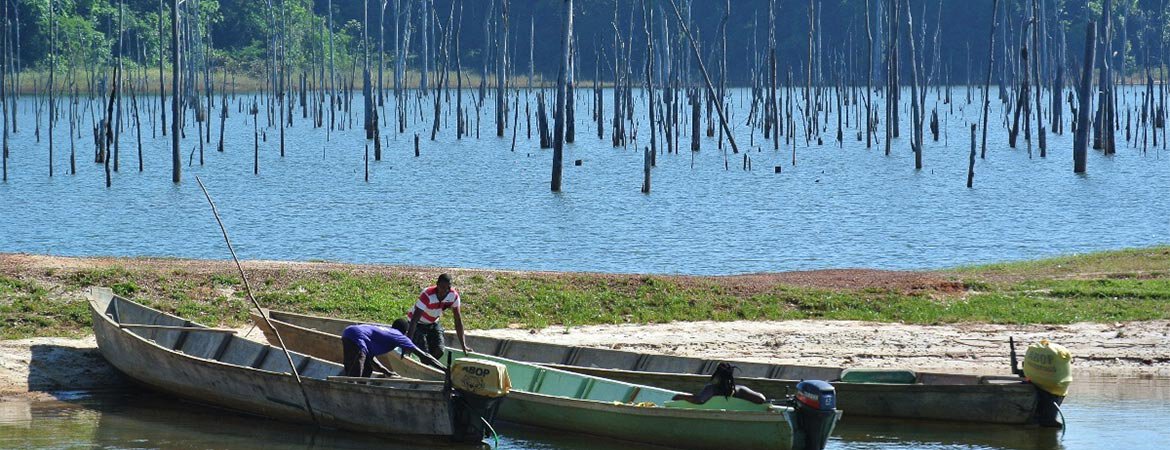
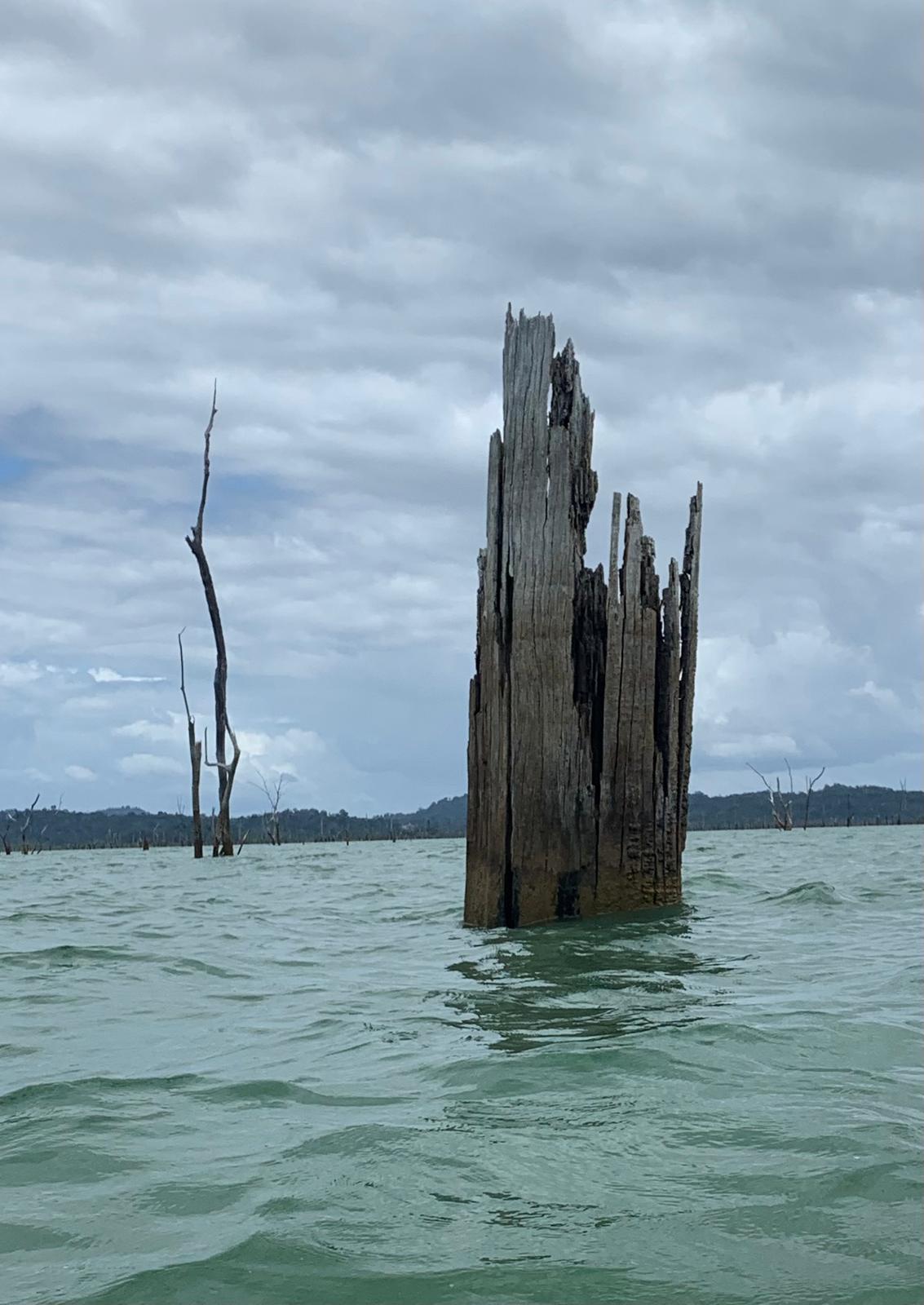
The Afobaka project was launched to provide electricity for the Bauxite mining factories and aluminium smelter practices, as well as for Paramaribo city. Whereas this project, for the government, was seen as a step towards ‘modernity’, it was unpalatable for the Marrons who had lived in the area for many years. The Marrons were faced with the loss of the 135.000-hectare environment, including historical and holy places, and areas where people used to exploit raw materials such as gold and timber, leaving behind a skeleton of dead trees till today, serving as a reminder of what once used to be a flourishing and rich rainforest. The lack of communication had tremendous direct effects, and multiple experts have warned about the devastating long-standing effects which made the communities totally dysfunctional in their belief- and survival system (Price, 2012, p. 27-55).
Approximately 6000 Marrons had to undergo transmigration resulting in an end to their original lifestyle they had known for centuries. A period of quick adaptation was ahead of them and a great extent of troubles arose, such as, unemployment, boredom, family disruption, and other conflict (Lank-Coninde et. al., 2023, p. 144). The unemployment in the areas triggered a lot of people, many of which were men, to leave the (transmigration) villages and look for jobs in Paramaribo or at the goldmines. Consequently, the kostgrondjes-cultuur (culture of small family-scale agriculture land) could not thrive as it used to due to the change in the division of labour between men and women. Ergo, the population of the larger villages declined by approximately 40 percent (Price, 2012, p. 27-55).
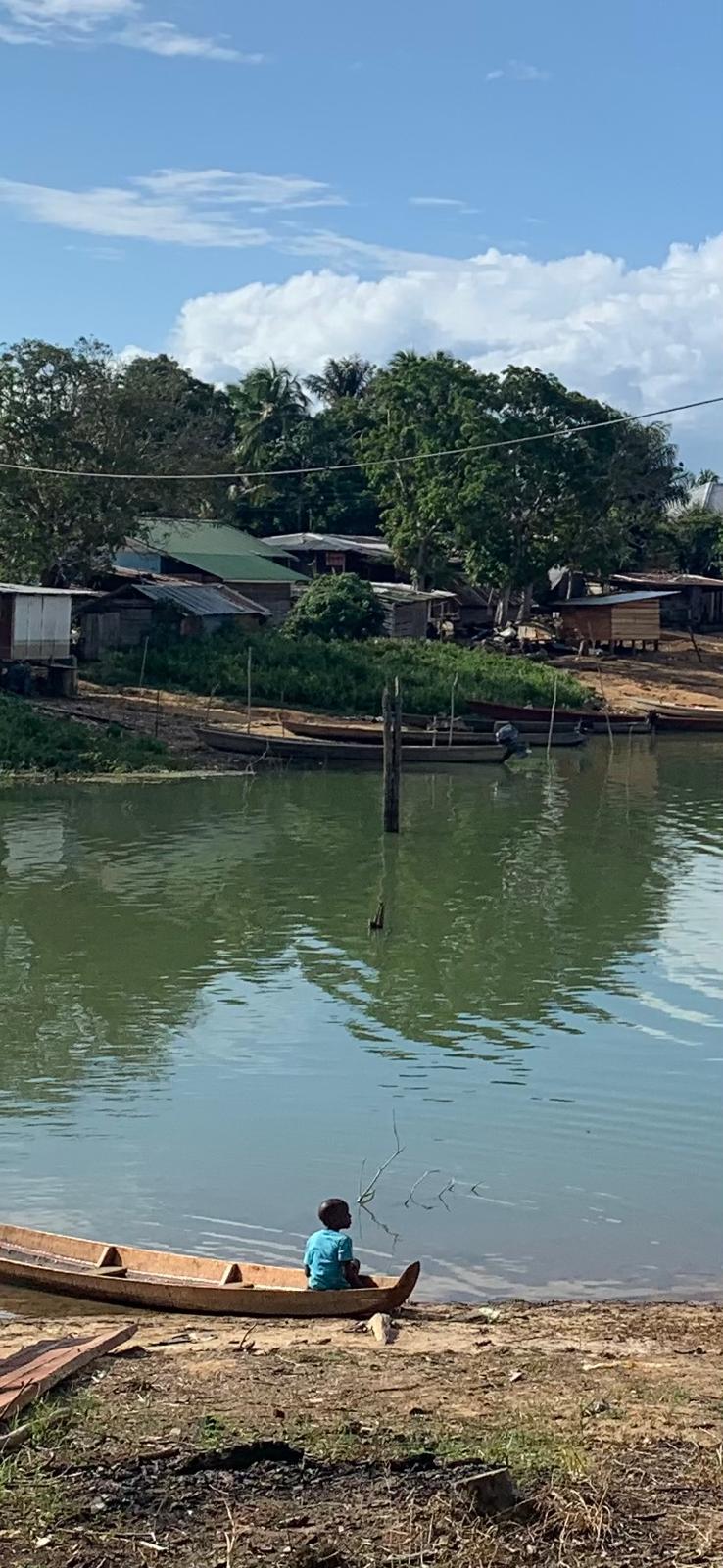
According to UN sources (Price, 2011, p. 27-55), the interior way of life is not comparable with living in urban areas. In the traditional way of living, most families live in cabins where the sleeping places differ from cooking- and recreation facilities. This is still the case for the up-stream villages I visited, yet, while driving through the transmigratiedorpen, e.g., Brownsweg, Klaaskreek, Nieuw-Koffiekamp, and Njun-Lombé, this was not applicable anymore. The houses built during the 1960s were structured in straight rows and each house was meant for one family—comparable to most Western households.
The Marrons were not included in the decision-making processes regarding the building of the dam, nor much in the consideration of the project-developers. Only a year after the contract to build the dam was signed, the government decided to inform the Marrons. This is both seen in the way the transmigration villages were insufficiently adjusted to the needs of the people, as well as in the absence of compensation for all the ground that was lost. After all, the Suriname government was responsible for the costs and implementation of the transmigratie (Price, 2012, p. 27-55).
“The society is dysfunctional even today after such a long time; the society has not healed. [forty years after displacement]. … and continue to suffer from its multiple effect” (Price, 2012, p. 45).
One of the dysfunctional elements is the way in which Marron society has become increasingly affected by and dependent on modern socioeconomic and political influences—particularly within labor networks. This is evident both in the emergence of new aspirations, driven by increased awareness of opportunities through social media, and at the same time in the disruption of traditional survival systems, which creates a need to find new ways of earning an income. However, limited access to developments such as electricity and the internet makes it difficult for many to participate in these changes. I recall a conversation with a group of young men who raised the issue of poor internet access. This lack of connectivity creates a major barrier to starting their own businesses, as they are unfamiliar with building websites and struggle to connect with fair employers. As a result, they are often forced to take on unstable, day-to-day jobs that do not always respect their labor rights.
The story of the Marron people in Suriname exemplifies a harsh reality: although the Afobaka dam was constructed under the banner of national development and justified by compelling and overriding public interests, the Marrons endured the full impact of displacement. This case illustrates what Michael Cernea defined as development-induced displacement and resettlement (DIDR) — a phenomenon where development projects, such as dams or infrastructure, cause involuntary relocation of communities (Cernea, 1990). Cernea’s Impoverishment Risks and Reconstruction (IRR) model further identifies the multiple social and economic risks faced by displaced populations; landlessness, joblessness, food insecurity, loss of access to common property resources, increase in diseases and social disintegration— offering a valuable framework to analyze the consequences of such displacements (Cernea, 1997). These tools are highly applicable to understanding the profound effects the forced displacement had on the Marron society.
What Cernea’s model may not fully capture is that state-led development, as seen in the Marrons case, can replicate colonial dynamics: communities are excluded from decision-making, stripped of rights, and denied the benefits of the very projects that displace them. This calls for greater critical awareness when evaluating development initiatives. Forced migration can be hidden behind positive-sounding terms like progress or modernization. True development should not displace — it must be inclusive, participatory, and empowering.
So when we talk about development, we must ask: Whose development are we talking about? Who gets to decide? And what tools — like Cernea’s IRR model — can help ensure that the past does not repeat itself?
References:
Cernea, M. M. (1990). Internal refugee flows and development-induced population displacement. Journal of Refugee Studies, 3(4), 320–339. Https://doi.org/10.1093/jrs/3.4.320
Cernea, M. M. (1997). The risks and reconstruction model for resettling displaced populations. World Development, 25(10), 1569–1587. https://doi.org/10.1016/S0305-750X(97)00045-1
Guillen, A. L. (2021). Maroon socioterritorial movements. Annals of the American Association of Geographers, 112(4), 1123–1138. https://doi.org/10.1080/24694452.2021.1959293
International Organization for Migration. (n.d.). Key migration terms – Definitions. Retrieved October 19, 2025, from https://www.iom.int/key-migration-terms
Lank-Coninde, G. J., Finisie, J., Finisie, W., Jabini, H., Laurens, S., Lienga, O., Main-Levant, P., Pansa, R., Pansa, T., & Soké Fonkel, T. D. (2023). Saamaka en de ontwikkeling. (F. Jabini, Ed.). Saamaka un Zunta ko a Wan.
Mutsaers, P., & de Vries, S. (2023). Maroon justice in Suriname: Pasts and presents worth fighting for. Contemporary Justice Review, 26(1), 71–92. https://doi.org/10.1080/10282580.2023.2216706
Price, R. (2012). Rainforest warriors: Human rights on trial. University of Pennsylvania Press.

Happy
0 %

Sad
0 %

Excited
0 %

Sleepy
0 %

Angry
0 %

Surprise
0 %
 0
0
 0
0